
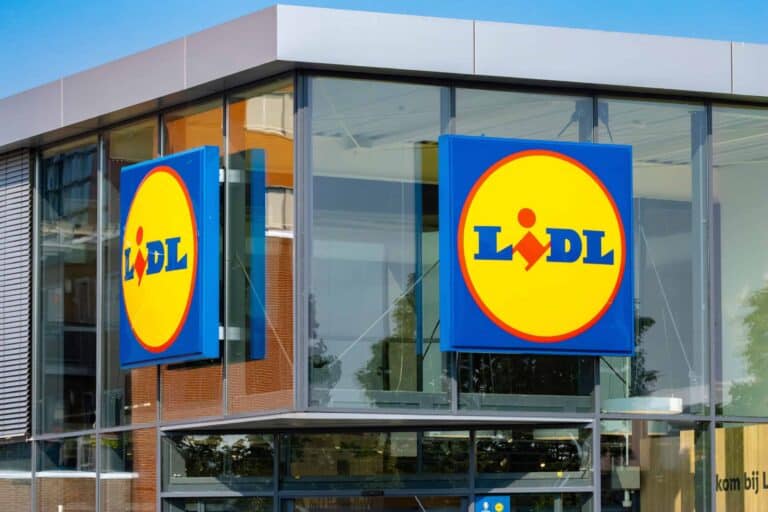
De Nederlandsche Bank will sign a major contract tomorrow with Schwarz Digits, the IT arm of Lidl owner Schwarz Group. DNB aims to reduce its dependence on American cloud companies. As a major Dutch organization, it is opting for a European partner, but how will this play out?
Sales Director Bernd Wagner announced the news on Monday at the Hannover Messe, according to De Telegraaf. The move itself comes as no surprise. DNB Director Steven Maijoor announced last October that he intended to “set a good example” and switch to a European cloud, though he acknowledged that it “is not yet as robust or high-quality as the one from the U.S.”
That is precisely the consideration every company must make. Can a European alternative function well enough to meet the organization’s requirements and needs? Lidl’s platform has been in development for years, but those of Amazon, Google, and Microsoft have sometimes had as much as 20 years of development work behind them.
The fact that the transition to European alternatives does not always go smoothly is evident in Schleswig-Holstein, where the local government is already struggling with the migration from Microsoft to an open-source environment.
Large organizations are already connected to Lidl’s cloud. For example, Lidl and the German supermarket chain Kaufland use it. Deutsche Bahn also collaborates with the Schwarz Group. But now a Dutch organization from a highly regulated sector is opting for this cloud.
Concerns about cloud dependency
Last year, the Dutch Central Bank (DNB) and the Netherlands Authority for the Financial Markets (AFM) warned that the Dutch financial sector had become too dependent on foreign IT service providers, particularly American ones. These concerns were fueled by geopolitical tensions. For example, a prosecutor at the International Criminal Court in The Hague was cut off from his Microsoft email account by President Donald Trump. The ICC is now also switching to non-American systems.
Incidentally, when issuing that warning, DNB also had to admit that it itself is largely dependent on American service providers for its digital infrastructure.
Schwarz Digits and Stackit
Schwarz Digits, via the Stackit cloud platform, has long positioned itself as a European alternative to American hyperscalers. The Lidl-owned company is building a sovereign cloud where all data falls under European law. This sets it apart from American providers, who, under the Cloud Act, are required to hand over data to U.S. authorities. Schwarz Digits recently announced an investment of 11 billion euros in a large data center in Lübbenau.
The project originally began as an internal IT system for Lidl and Kaufland, but is now also attracting external clients, including SAP and Bayern Munich. Together with Deutsche Telekom, it is working on broader European IT alternatives.
A spokesperson for DNB confirmed concerns about cloud dependency on Monday but declined to comment on individual contracts. “That is why, with every new step toward the cloud, we explicitly assess geopolitical risks and explore how we can reduce our dependency,” the spokesperson said.