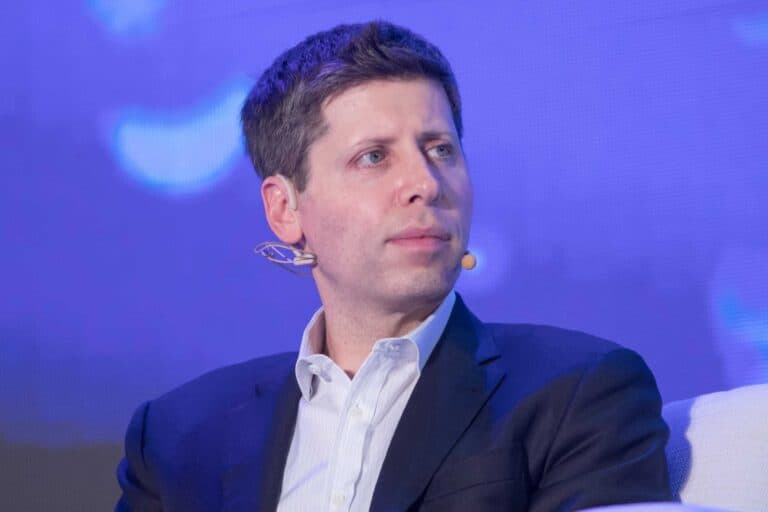
The legal battle between Elon Musk and OpenAI took another sharp turn on Tuesday. During a hearing in federal court in Oakland, OpenAI CEO Sam Altman (photo) defended himself against Musk’s accusations that he had abandoned OpenAI’s original mission. According to Altman, it was Musk who wanted to gain more control over the AI company and was strongly focused on commercial interests.
This is according to Reuters. The case centers on OpenAI’s transition from a nonprofit organization to a model involving commercial activities. Musk argues that he financially supported OpenAI on the premise that the company would develop AI in the interest of society. According to him, that mission has been abandoned now that OpenAI has grown into a billion-dollar company with close ties to Microsoft.
OpenAI counters that Musk was aware of plans for a commercial structure early on and only opposed that course after he himself had distanced himself from the company.
Altman: Musk Wanted a Dominant Position Within OpenAI
During his testimony, Altman stated that Musk actually wanted to secure a dominant position within OpenAI. According to him, Musk once asked for a 90 percent stake in the company.
Musk also reportedly pushed for a merger between OpenAI and Tesla. Altman stated that he objected to this because OpenAI had to remain independent to safeguard its original objectives. Additionally, Altman refuted the accusation that he, together with OpenAI President Greg Brockman, had transformed a nonprofit organization for personal gain.
Altman also stated that, in his view, Musk had a negative influence on the research culture within OpenAI, SiliconANGLE adds. Researchers were reportedly forced to constantly defend their results, whereas, according to Altman, fundamental AI research actually requires longer development cycles and space to develop new ideas.
Musk Questions Altman’s Credibility
During cross-examination, Musk’s lawyers primarily sought to attack Altman’s credibility. In doing so, they cited statements from former OpenAI employees and board members who had previously criticized the corporate culture within the company.
Attorney Steven Molo asked Altman directly whether he had ever misled business partners. Altman replied that he sees himself as an honest and trustworthy leader and does not believe he has deliberately misinformed others.
The internal crisis at OpenAI in 2023 was also discussed during the trial. At that time, Altman was briefly removed by the board due to concerns about his communication with the organization. According to Altman, the situation primarily involved misunderstandings and a breach of trust within the board, not deliberate deception.
Questions about conflicts of interest
Altman’s investments in other technology companies were also discussed during the trial. Musk’s lawyers asked questions about his stake in Helion Energy, a company that may supply energy to OpenAI data centers. Investments in Reddit and other companies were also discussed in the context of potential conflicts of interest.
According to OpenAI, Musk initially supported the commercial plans. The company formally established a commercial arm in 2019 to attract sufficient funding for the development of advanced AI systems.
The lawsuit could have major consequences for OpenAI’s future. According to Reuters, Musk is seeking approximately $150 billion in damages from OpenAI and Microsoft. He also wants Altman and Brockman to lose their leadership positions.